
Why Are There So Many Small Dishes on a Korean Table?
Imagine ordering just one bowl of stew in Korea, and six or seven small dishes arrive with it. Did the restaurant make a mistake? Not at all. In Korea, that is simply how an ordinary meal begins.
A Korean Table Is More Than One Dish
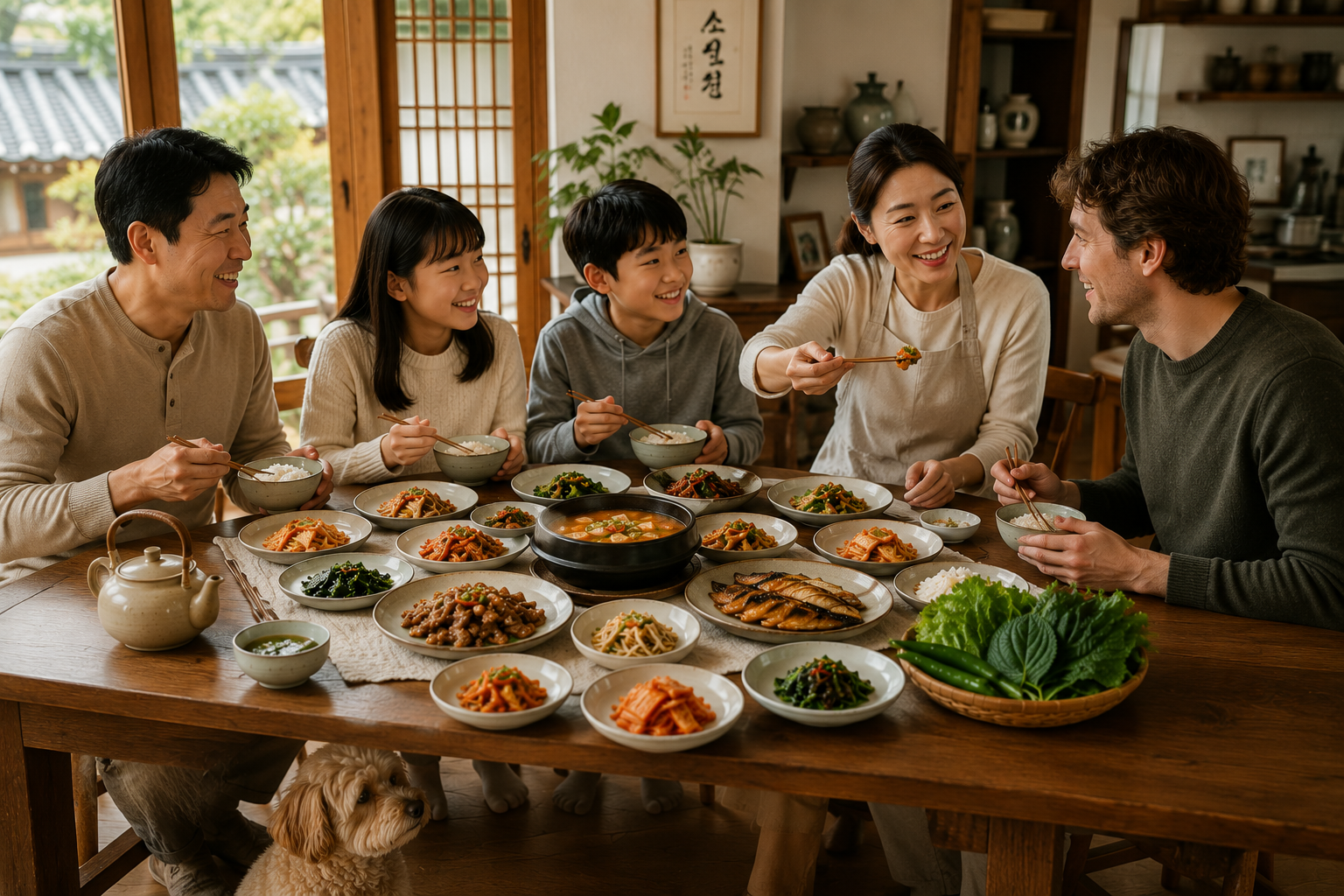
Many visitors are surprised the first time they sit down at a Korean restaurant. They order one main dish, but the table quickly fills with rice, soup, kimchi, vegetables, small plates, sauces, and sometimes grilled fish or braised meat.
A Korean meal is usually built around rice, soup, and side dishes. You take a spoonful of rice, try one side dish, sip a little soup, and then move to another flavor. It is not a meal centered on one large plate. It is a meal made by moving through many small tastes.
That rhythm is one of the easiest ways to understand Korean dining. Spicy, salty, mild, warm, cool, soft, and crunchy foods all sit together on the same table, balancing one another.
Korea Is Much More Than Kimchi
When people think of Korean food, kimchi is usually the first thing that comes to mind. That is understandable. Kimchi is one of Korea’s most famous foods, and there are many kinds of it, from napa cabbage kimchi to radish kimchi, young radish kimchi, and mild white kimchi.
But a Korean table cannot be explained by kimchi alone. Spinach namul, seasoned bean sprouts, stir-fried anchovies, braised potatoes, rolled omelet, braised beef, grilled fish, tofu, seaweed, and countless other side dishes can appear on the table.
Koreans may eat rice every day, but when the side dishes change, the whole meal feels different.
Even the same side dish can taste different from house to house. Some families use more garlic. Some prefer a stronger sesame oil aroma. Some make their food lighter, while others like it bold and salty. That is why Korean side dishes are not just “extras.” They are small pieces of home cooking.
Can You Ask for More Side Dishes?
Many foreign visitors hesitate when they finish a side dish. They wonder, “Can I ask for more? Will I be charged?” In many Korean restaurants, basic side dishes can usually be refilled for free.
This is not only a restaurant service. It also comes from the way Korean meals are understood. Side dishes help people enjoy their rice and main dish properly. A table should feel generous enough for the guest to eat comfortably.
Basic side dishes such as kimchi, bean sprouts, or simple namul are often refillable. But more expensive items, such as marinated crab, grilled fish, or meat-based dishes, may not be free. If you are unsure, just ask, “Can I get more banchan?”
Why Don’t Koreans Hold Their Rice Bowls?
In Japan and China, it is common to lift the rice bowl while eating. You can see similar habits in parts of Southeast Asia as well. In Korea, however, people usually leave the rice bowl on the table.
Many Koreans grew up hearing something like, “Don’t lift your rice bowl when you eat.” I heard it too when I was young. When I asked why, the answer was usually simple: “It is not polite.” Some older people even said that lifting the bowl would “send your luck away.” It was not always explained in detail, but it was treated as basic table manners.
There are several reasons behind this custom. Korea’s Confucian-influenced etiquette, the habit of eating rice and soup with a spoon, and the use of heavy or hot metal bowls all helped shape the way Koreans eat. Today, some younger people eat more freely, especially under the influence of other food cultures, but placing the rice bowl on the table is still the most familiar Korean style.
- Spoon-based dining — Koreans traditionally use a spoon for both rice and soup, so there is less need to lift the bowl.
- Table manners — Keeping the bowl on the table has long been seen as a neat and proper way to eat.
A Meal Continues Until the Last Sip
In the past, a Korean meal did not always end when the rice and side dishes were gone. Many homes finished the meal with sungnyung, a warm drink made by pouring hot water over the toasted rice left at the bottom of the pot.
Sungnyung has a gentle roasted flavor. It relaxes the mouth after salty or spicy food and gives the meal a quiet ending. Barley tea was also common in Korean homes. Some families drank it cold like water, while others served it warm to guests.
In summer, people often enjoyed maesil tea, made from green plums. Its sweet and tart flavor made the mouth feel clean after a meal. Before modern toothbrushes and toothpaste became part of everyday life, drinks like these also helped people rinse and refresh the mouth after eating.
Dessert Has Its Own Story
Today, many Koreans finish a meal with coffee or fruit. But in the past, traditional drinks such as sikhye and sujeonggwa often played the role of dessert.
Sikhye is a sweet rice drink made with malted barley. The small grains of rice floating in the cup may look unusual at first, but the flavor is gentle, cool, and lightly sweet. It is especially pleasant after a rich or heavy meal.
Sujeonggwa is made by simmering cinnamon and ginger, then sweetening the drink and often serving it with dried persimmon or pine nuts. It has a warm fragrance and a clean finish. For many Koreans, it still brings to mind holidays, family gatherings, and guests being welcomed into the home.
A Table Filled With More Than Food
For generations, Koreans have treated the table as a place to share more than food. Family members sat around the same table, reaching for the same side dishes and offering one another bites. “Try this one” is a small phrase, but in Korea it often carries warmth.
Visitors from cultures where everyone has a separate plate may find this surprising at first. Sharing side dishes from the same table can feel unfamiliar. These days, many restaurants provide individual plates and serving utensils, but the older feeling of eating together from one shared table is still part of Korean dining culture.
There is another small detail visitors sometimes notice: Koreans often eat quickly. Part of that may come from busy work routines, and part of it may come from the rhythm of moving between rice, soup, and side dishes. Still, whether the meal is quick or slow, the heart of the table remains the same. It is a place where people eat together.