KoreaKnack

Category: Meals

  • 냉면 (Ice-Cold Noodle)

    냉면 (Ice-Cold Noodle)

    6 Magical Korean Cold Noodles to Beat the Summer Heat

    냉면 · Ice-Cold Noodle Magic

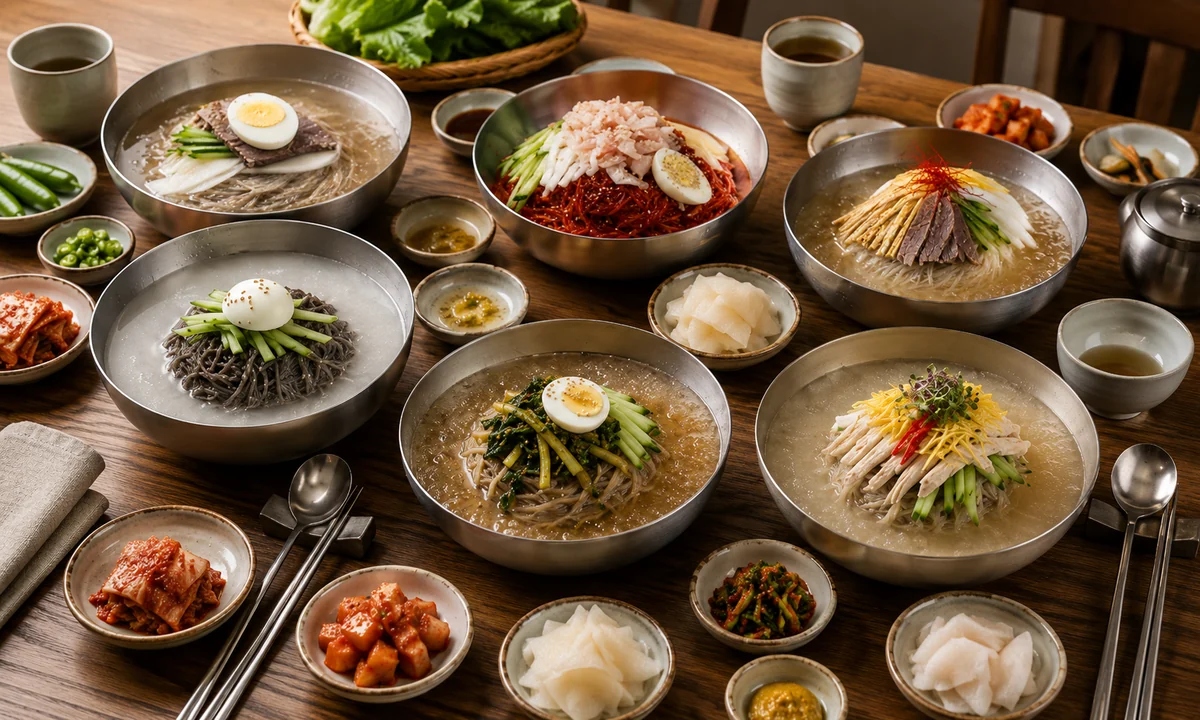
    If Queen Elsa from Disney’s Frozen ever found herself stranded in the sweltering, humid grip of a South Korean midsummer, she wouldn’t reach for an ordinary ice cream cone. Instead, she would undoubtedly seek out a culinary sorcery unique to the peninsula: Naengmyeon. To the uninitiated international traveler, the concept of a savory, ice-chilled soup packed with long, elastic noodles might sound peculiar, even downright baffling. Yet, beneath the frosty surface of these stainless steel bowls lies a profound philosophy deeply rooted in the ancient Eastern wisdom of Yin and Yang. Koreans do not merely eat cold food to lower their physical temperature; they use it to harmonize the body’s internal energies after consuming heavy, hot dishes. This ritualistic neutralizing effect acts as a natural, time-tested digestive aid. In fact, a seasoned culinary expert with 58 years of experience on the ground notes that this magical dish digests so efficiently that you will find yourself completely hungry again within just two short hours. Step into the culinary ice palace of Korea and discover six distinct regional varieties of Naengmyeon that promise to transform your perception of summer refreshment.

    평양냉면 Pyongyang Naengmyeon
    TasteSubtly elegant clear beef broth with a whispering nutty finish
    ForPurists, minimalist foodies, and curious gourmands
    WhereHistoric, decades-old heritage restaurants in downtown Seoul
    Price₩14,000 – ₩16,000
    ~$9.3 – $10.6

    Originating from the historical capital of North Korea, Pyongyang Naengmyeon is widely considered the holy grail of Korean cold noodle dishes. The noodles themselves are crafted primarily from high-quality buckwheat, yielding a surprisingly delicate, tender texture that snaps effortlessly between your teeth while releasing a rustic, earthy perfume. The broth is a masterpiece of ultimate restraint, meticulously simmered using premium beef and chicken, then strained until crystal clear, and blended in a golden ratio with crisp, tangy radish water kimchi (Dongchimi).

    First-time international travelers are often startled by its flavor profile, occasionally wondering if the chef forgot to season the soup entirely due to its incredibly subtle nature. However, this minimalist delicacy possesses a legendary addictive quality. By the third bowl, your palate completely adapts, revealing a profound, delicate umami and an elegant cleanliness that makes modern, heavily processed foods feel overwhelming. Local etiquette dictates that you should avoid drowning the bowl in vinegar or mustard initially; instead, take a deep sip of the pure, unadulterated broth directly from the rim to appreciate its quiet majesty.

    함흥냉면 Hamhung Naengmyeon
    TasteA fierce harmony of fiery, tangy, sweet chili sauce and extreme chewiness
    ForHeat seekers, texture lovers, and bold flavor enthusiasts
    WhereThe legendary Ojang-dong Noodle District in Seoul
    Price₩12,000 – ₩15,000
    ~$8.0 – $10.0

    Representing the rugged northern region of Hamhung, this dish stands as a striking, vibrant antithesis to its Pyongyang counterpart. Built to reflect the resilient spirit of its mountainous origins, the noodles are extruded from potato or sweet potato starch, resulting in ultra-thin, translucent strands possessing a remarkably springy, rubber-band-like elasticity. Instead of swimming in a cold broth, these hyper-chewy noodles are thoroughly coated in a fiery, crimson-red sauce made from fermented chili paste, garlic, sesame oil, and a touch of sweet vinegar.

    To experience this dish in its most authentic form, you must order the iconic Hoe-naengmyeon, which comes crowned with a generous heap of raw skate or chewy pollack sashimi cured in a spicy-sweet marinade. The contrasting textures of the crunchy, fermented fish and the fiercely springy noodles create an sensational playground in your mouth. When the creeping heat of the chili paste begins to overwhelm your senses, reach for the warm kettle of savory beef broth placed on your table, sipping it like tea to soothe your tongue and balance the temperature naturally.

    진주냉면 Jinju Naengmyeon
    TasteDeeply layered seafood umami enriched by savory, golden beef pancakes
    ForVisual foodies and lovers of extravagant, royal-style culinary arts
    WhereJinju city in Gyeongsangnam-do or specialized flagship branches
    Price₩13,000 – ₩16,000
    ~$8.6 – $10.6

    Hailing from the historic southern city of Jinju, famous for its aristocratic culture and refined arts, this dish is an opulent celebration of land and sea. While standard northern styles rely heavily on land animals for their soup bases, Jinju artisans brew a remarkably complex, dark broth by simmering dried round herring, clams, mussels, and dried anchovies for hours. The result is a profoundly savory, oceanic depth that avoids any trace of fishiness, serving as a robust canvas for a spectacular mountain of colorful toppings.

    The crowning glory of this gorgeous bowl is Yukjeon—tender, thinly sliced beef coated in a delicate egg batter, pan-fried until golden, and sliced into elegant ribbons. As these warm, savory beef pancake strips sit atop the icy, jewel-toned seafood broth, their rich oils infuse the soup, creating a luxurious culinary harmony that is completely unique to the region. It is a visually arresting, multi-textured masterpiece that offers an immediate sense of royal hospitality and absolute satiety.

    황해도/백령도식 냉면 Baengnyeongdo-style Naengmyeon
    TasteA savory, briny depth unlocked by a secret splash of fermented fish sauce
    ForCulinary adventurers and seasoned travelers seeking hidden local gems
    WhereBaengnyeong Island and the specialized noodle enclaves of Incheon
    Price₩11,000 – ₩14,000
    ~$7.3 – $9.3

    Developed by refugees from the Hwanghae Province who settled on Baengnyeong Island—the northernmost outpost of South Korea’s western sea—this style represents a fascinating micro-regional food culture. The absolute secret to this bowl lies in its unique seasoning method: a rich, deeply savory pork broth that is traditionally customized at the table with a generous splash of locally produced Sand Lance fish sauce (Kkanari-aekjeot).

    While the mention of fish sauce might cause hesitant international diners to pause, the reality is pure culinary magic. The intense fermentation completely strips away any harsh fish odor, leaving behind an incredibly smooth, deeply satisfying savory foundation that enhances the pork broth’s natural sweetness. The noodles, incorporated with rough buckwheat hulls, offer a coarse, earthy texture that holds onto the broth beautifully. For the ultimate local experience, blend a spoonful of creamy yellow mustard directly into the cloudy soup to achieve a perfectly balanced tangy finish.

    열무냉면 (가정식) Yeolmu Naengmyeon
    TasteCrisp, hyper-refreshing crunch of traditional summer radish kimchi
    ForKimchi enthusiasts and anyone seeking an authentic, rustic home-cooked escape
    WhereLocal neighborhood diners (Bunsik-jip) and traditional households
    Price₩8,000 – ₩11,000
    ~$5.3 – $7.3

    Long before high-end commercial refrigeration existed, Korean matriarchs turned to their clay jars in the heat of July and August to conjure a rustic, deeply comforting family remedy. This home-style treasure takes a chilled noodle base and tops it with a mountain of perfectly fermented Yeolmu-kimchi—a seasonal variety made from young, tender summer radish greens. The young greens provide a remarkably crisp, snap-frozen texture that immediately revitalizes an appetite wilted by intense humidity.

    As the vibrant, naturally carbonated red juices of the radish kimchi bleed into the ice-slush broth, they create a dazzlingly refreshing, zesty soup that clears the sinuses and cools the chest. While it lacks the aristocratic lineage of palace styles, this humble bowl represents the true comforting soul food of modern Koreans, instantly evoking memories of sitting directly in front of an electric fan during childhood summers, slurping from a massive stainless steel basin.

    초계냉면 (보양 냉면) Chogye Naengmyeon
    TasteZesty, invigorating combination of shredded chicken and sweet-sour mustard broth
    ForTravelers needing a powerful, high-protein energy boost to restore vitality
    WhereSpecialized Chogye-tang restaurants scattered throughout the country
    Price₩12,000 – ₩15,000
    ~$8.0 – $10.0

    Originally enjoyed as a highly prized winter delicacy within the royal courts of the Joseon Dynasty, this ancient recipe has evolved into the ultimate modern summer stamina bowl. The base is an meticulously clarified chicken broth, with every single trace of fat skimmed away to ensure an exceptionally clean, refreshing mouthfeel. The soup is heavily infused with vinegar (“Cho”) and hot mustard (“Gye”), creating a bright, invigorating elixir designed to stimulate blood circulation and restore physical energy.

    Instead of traditional beef slices, this bowl is piled high with tender, hand-shredded chicken breast that has been lightly seasoned with sesame oil and vinegar. The brilliant interplay between the high-protein chicken meat, the icy-tart slush, and the springy noodles is widely believed by locals to act as a powerful tonic, restoring vital energies lost to heavy sweating under the relentless summer sun. It is a historical wellness formula masquerading as a deliciously refreshing meal.

    The Ultimate Formula Bulgogi & Naengmyeon Combination

    To unlock the absolute pinnacle of the Korean cold noodle experience, international travelers must follow a legendary, non-negotiable culinary law established across local dining rooms. Never eat your noodles in isolation. Instead, pair your ice-cold bowl with a sizzling platter of freshly grilled Bulgogi—thinly sliced beef marinated in a sweet, savory soy sauce blend. By wrapping a piping-hot, smoky piece of caramelized beef directly around a bundle of freezing-cold, tangy noodles, you create a magnificent sensory collision. The sudden contrast of hot and cold, coupled with the marriage of rich, savory meat juices and sharp, icy broth, delivers an immediate gastronomic epiphany. It is the definitive culinary harmony of the peninsula, promising to turn the oppressive summer heat into an unforgettable celebration of flavor.

    Which bowl from this frozen palace will be your choice to conquer the heat? When you set foot in Korea, make sure to experience this icy miracle alongside a side of sizzling Bulgogi for the complete, authentic journey.
  • 불고기 (Bulgogi)

    불고기 (Bulgogi)

    The Symphony of Fire and Sweet Marinated Meat: Six Culinary Expressions of Korean Bulgogi

    불고기 · Bulgogi: Six Grand Variations in One Name

    For global travelers stepping into the vibrant culinary landscape of South Korea, bulgogi is often the very first love affair. Its mesmerizing aroma of sweet soy glaze caramelized over open flames holds an almost universal appeal. Yet, the classic, broth-laden variety ubiquitous in international K-towns merely scratches the surface of this vast epicurean universe. Across the Korean peninsula, diverse regional microclimates, historic trade routes, and distinct community traditions have shaped bulgogi into a deeply sophisticated spectrum of dishes. From meticulously separated beef cuts to the dramatic interplay between perforated brass domes and iron wire meshes, bulgogi has evolved into a living testament to Korean hospitality and culinary ingenuity. Prepare to embark on an immersive journey through six definitive expressions of a national masterpiece.

    서울식 불고기 Seoul-style Bulgogi: The Classic Broth-Simmered Heritage
    TasteSweet, Savory, and Deeply Umami-Rich Broth
    ForLovers of Comfort Food, Rice Pairings, and Noodles
    WhereHistoric Dynastic Eateries Throughout Seoul
    Price₩18,000 ~ ₩28,000
    ~$12 ~ $19

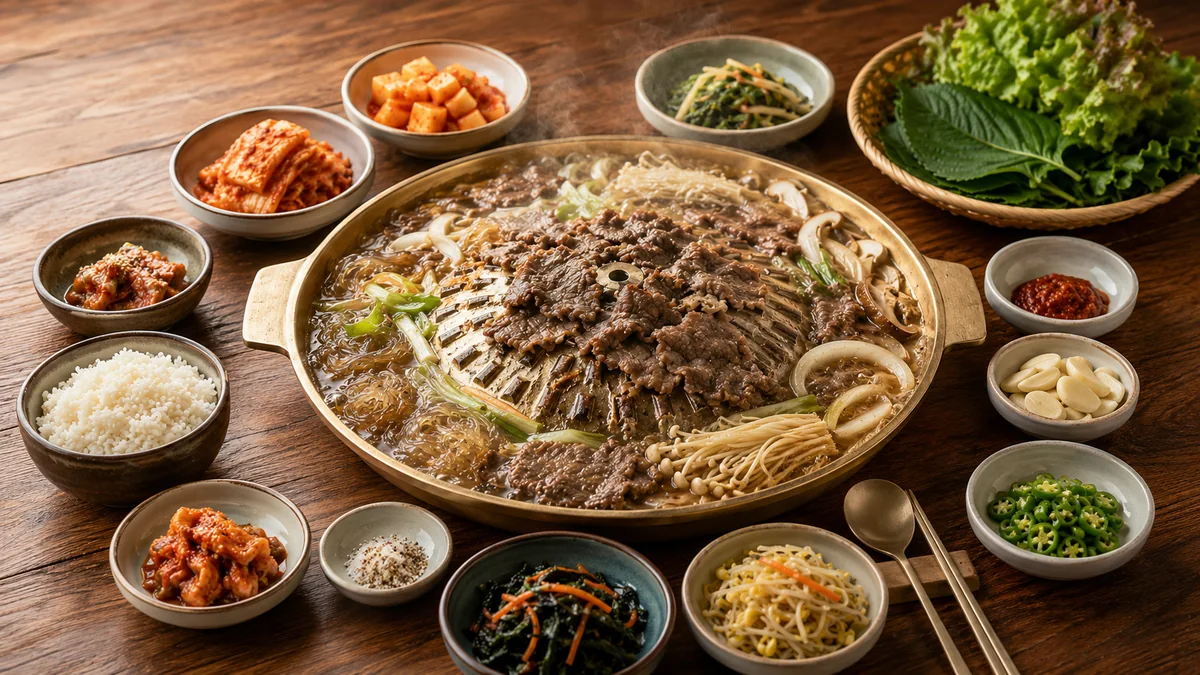
    Seoul-style bulgogi represents a brilliant architectural feat in Korean dining, effortlessly blurring the boundaries between a sizzling charcoal grill and a comforting hot pot. The magic lies within a highly specialized, convex brass or copper pan featuring a raised dome perforated with small holes, encircled by a deep, hollow moat at the outer rim. Meticulously shaved ribbons of high-quality beef, thoroughly marinated in an elegant blend of soy sauce, crushed garlic, and fruit purees, are placed atop the blazing center dome to sear quickly. As the meat cooks under intense direct heat, its luscious, caramelized juices slowly cascade downward, gathering in the outer trench where a pristine, savory vegetable broth awaits.

    Navigating this culinary canvas requires an insider’s technique. Seasoned local diners relish the dual-texture experience: savoring the tender, fire-kissed beef slices straight from the dome first, before letting the remaining meat submerge into the reservoir below. In this simmering moat, an array of enoki mushrooms, sweet scallions, and translucent sweet potato glass noodles absorb the rich, beef-infused nectar. The resulting broth is incredibly soothing and naturally sweet, making it the ultimate vehicle for mixing directly into a bowl of warm, fluffy white rice. Rooted in the affluent banquet cultures of old Seoul, its gentle, non-spicy profile remains a beloved, foolproof introduction for international epicures seeking comfort on a plate.

    언양식 불고기 Eonyang-style Bulgogi: The Charbroiled, Smokey Patty Masterpiece
    TasteIntensely Smokey, Concentrated Beef Flavor
    ForEnthusiasts of Authentic Fire-Grilled Textures
    WhereEonyang Bulgogi Special Zone in Ulsan
    Price₩22,000 ~ ₩30,000
    ~$15 ~ $20

    Hailing from the rugged, historic livestock hubs of Ulsan, Eonyang-style bulgogi delivers an entirely unexpected, brothless revelation that subverts typical expectations. Visually resembling a beautifully rustic, oversized meat pancake, this regional treasure prioritizes purity and intense texture. Fresh, premium local beef is finely minced or pounded by hand to tenderize the fibers without destroying their structural integrity. It is then blessed with a deceptively minimalist seasoning paste, ensuring the natural integrity of the meat is enhanced rather than masked. The seasoned beef is pressed firmly into a large, cohesive disc, sandwiched between steel wire racks, and hoisted over blazing premium oak charcoal embers.

    Every bite delivers a stunning textural contrast: a delightfully caramelized, slightly crisp exterior giving way to an incredibly succulent, juice-locked interior. The constant flipping over open embers imbues every crevice of the meat with a deeply intoxicating, woody smoke profile. Historically, this humble yet labor-intensive dish surged into national prominence during the mid-20th century construction of the Gyeongbu Expressway, fueling weary, hard-working laborers who spread tales of its unparalleled flavor across the country. To enjoy this like a true local, tear a generous piece with your chopsticks, cradle it in a fresh perilla leaf, add a slice of raw garlic dipped in rustic soybean paste, and let the smoky explosion unfold.

    광양식 불고기 Gwangyang-style Bulgogi: The Shaved, Flash-Grilled Artisan Cut
    TasteDelicate Sweetness, Tender, and Instantly Seared
    ForConnoisseurs of High-End, Melt-in-Your-Mouth Beef
    WhereThe Celebrated Bulgogi Street of Gwangyang
    Price₩24,000 ~ ₩35,000
    ~$16 ~ $23

    Deep in the sun-drenched valleys of Jeollanam-do province, Gwangyang-style bulgogi elevates the concept of marinated meat to an absolute fine art. This style completely rejects the conventional practice of soaking meat in liquid marinades for hours or days, which can break down beef textures excessively. Instead, master chefs use incredible knife skills to slice exceptionally well-marbled beef into paper-thin sheets. The moment a guest places an order, these pristine cuts are lightly massaged on the spot with an ultra-subtle glaze of aged soy sauce, cold-pressed sesame oil, and a whisper of sugar, immediately before being sent to the table.

    Because the meat is dressed just seconds before meeting the fire, the brilliant ruby-red hue and innate sweetness of the high-grade beef remain completely uncompromised. Searing over top-tier white charcoal, the thin ribbons cook almost instantaneously, developing a beautiful char while locking in pristine juices. The texture is ethereal, practically dissolving on the tongue with a delicate harmony of faint sweetness, nutty sesame oil, and clean charcoal smoke. Pairing this delicate masterpiece with local pickled seasonal greens or crisp, refreshing white kimchi cuts through any potential richness, ensuring that every bite feels completely revitalized and infinitely craveable.

    돼지 양념 불고기 (간장) Soy Sauce Pork Bulgogi: The Nostalgic Soul Food of Everyday Heroes
    TasteSavory, Comfortingly Sweet, and Richly Satisfying
    ForBudget-Conscious Travelers Seeking Hearty Local Classics
    WhereNeighborhood Backalleys and 24-Hour Driver Diners
    Price₩9,000 ~ ₩14,000
    ~$6 ~ $9

    While beef bulgogi historically graced the tables of royalty and wealthy elites, soy sauce pork bulgogi emerged as the deeply cherished champion of the working class. Utilizing thinly shaved, economic cuts of pork shoulder or front leg, this dish involves marinating the meat thoroughly in a robust, deeply flavorful brown sauce driven by dark soy, cracked black pepper, ginger, and fruit juices. The natural marbling of pork lends a distinctively rich, unctuous mouthfeel that integrates seamlessly with the caramelized glaze, transforming simple ingredients into an incredibly addictive rice thief.

    This dish forms the backbone of Korea’s iconic “Gisa Sikdang” (taxi driver diners), celebrated for serving massive, lightning-fast portions that offer maximum flavor and caloric comfort. There is an understated poetry in watching a platter of this pork bulgogi arrive at your table, sizzling intensely on a seasoned iron skillet. Wrapping a generous heap of the deeply savory pork inside a crisp romaine lettuce leaf alongside a dollop of pungent ssamjang sauce yields a timeless, well-rounded bite. It stands as a testament to everyday Korean home cooking, providing a profound sense of warmth and full-bellied satisfaction without breaking the bank.

    돼지 양념 불고기 (매콤) Spicy Pork Bulgogi: The Fiery, Wok-Seared Street Culinary Icon
    TasteBold, Sweet-Spicy Heat with a Direct Flame Punch
    ForThrill-Seekers Craving Authentic Korean Spices
    WhereVibrant Night Markets and Retro Drinking Tents
    Price₩9,500 ~ ₩15,000
    ~$6 ~ $10

    Capturing the contemporary Korean obsession with bold, multi-dimensional spice, spicy pork bulgogi—affectionately referred to locally as *Jeyuk Bokkeum*—is an absolute powerhouse of flavor. The foundation is built upon a fiery, thick crimson glaze composed of sun-dried red chili paste (gochujang), smoky red chili flakes (gochugaru), grated garlic, and corn syrup. Slices of tender pork are aggressively tossed in this vibrant mixture before being introduced to a blazing hot wok, where high heat quickly chars the sugars and fats, creating a beautiful, glossy lacquer.

    The first bite hits the palate with an assertive wave of sweet heat, which is quickly balanced by the rich savory profile of the pork and the caramelized sweetness of flash-fried onions and green cabbage. It is a thrilling sensory experience that makes your brow sweat yet compels your chopsticks to dive right back in for more. In the evenings, this dish seamlessly transitions into the ultimate *anju* (alcohol-pairing food), packing out retro night-market stalls where friends gather to wash down the smoky, spicy warmth with shots of ice-cold, refreshing soju after a demanding week.

    오삼불고기 Osam Bulgogi: The Ultimate Gastronomic Surf-and-Turf Fusion
    TasteComplex Seafood Umami Paired with Rich, Savory Fats
    ForAdventurous Eaters Seeking Complex Multitextural Bites
    WhereCoastal Gangwon Province and Specialty Hubs Nationwide
    Price₩12,000 ~ ₩18,000
    ~$8 ~ $12

    Osam bulgogi represents a brilliant evolution in modern Korean culinary history, celebrating a glorious harmony where land meets sea. The name is a clever portmanteau of *Ojing-eo* (tender native squid) and *Samgyeopsal* (rich pork belly), both brought together in a robust, deeply aromatic spicy glaze. When cooked together over a hot tabletop griddle, an incredible chemical synergy occurs: the melting pork fat gently tenderizes the squid, while the natural juices of the squid release a deep, rich oceanic umami that infuses back into the pork slices.

    The resulting dish offers a spectacular playground of textures—the soft, clean snap of the squid juxtaposed against the rich, melt-in-your-mouth pork belly, all bound together by tender-crisp leeks and onions. This surf-and-turf marvel originated as a beloved regional specialty in the coastal highlands of Gangwon-do, where mountains meet the East Sea, before capturing the hearts of foodies nationwide. The ultimate climax of this meal is non-negotiable: when the meat is nearly finished, servers toss dynamic additions of toasted seaweed flakes, fragrant perilla leaves, and sesame oil directly onto the remaining crimson glaze on the hot grill, crafting a legendary fried rice finish.

    Mastering Home-Cooked Bulgogi: An Expert Guide to Cuts and Tenderization
    Master Tips for Home-Cooked Bulgogi

    Recreating an authentic, restaurant-quality bulgogi experience within your own home kitchen requires a fundamental understanding of traditional Korean butchery and marinating sciences. In Korea, beef is treated with extreme reverence, divided into an astonishing 29 micro-cuts to optimize texture and flavor extraction. For bulgogi, the ideal approach focuses on lean, muscular sections with subtle fat distribution that can absorb marinades beautifully without becoming tough. The four pillar cuts are the front leg (Apdari-sal), top round (Udun-sal), bottom round (Seoldo), and chuck (Moksim). The top round is incredibly lean and uniform, providing a clean, healthy bite, while the front leg features subtle connective tissues that yield a much deeper beefy aroma and satisfying chew. When thinly shaved against the grain, these cuts retain incredible moisture, acting like sponges for your marinade.

    The absolute holy grail of a successful bulgogi marinade is the strategic incorporation of fresh Asian pear puree. Asian pears contain natural proteolytic enzymes, specifically calpain, which break down tough muscle proteins gently and effectively, ensuring the thin meat strips achieve a luxurious tenderness. Furthermore, the fruit provides a delicate, clean sweetness that elegantly glazes the meat when seared, completely outclassing the one-dimensional sweetness of refined white sugar. Should you find yourself in a modern kitchen where fresh Asian pears are locally unavailable, a brilliant and highly effective household shortcut utilized by many busy Korean home cooks is adding a small splash of classic Coca-Cola to the base. The mild acidity and distinct spice notes of the soda serve as a highly efficient tenderizing agent, adding a unique depth of flavor that saves the day in a pinch.

  • 치킨 (Korean Chicken)

    치킨 (Korean Chicken)

    Korea’s Chicken, Evolved — and a Hidden Duck Feast

    치킨 · Korean Chicken & Duck

    When night falls, Korean cities turn into one giant chicken oven — every alley fills with a savory, buttery smell. No single country can really claim deep-fried chicken as its own, and Korea’s version traces its start to American fried chicken. But once it landed here, it evolved into something else entirely. Take your first bite of chicken in Korea and a whole new world opens up — a level of crunch the West has never known.

    후라이드 치킨 Fried Chicken
    Tastesavory, intensely crispy, juicy inside
    ForFirst-timers & crunch lovers
    WhereMany chicken shops · delivery apps
    Price₩15,000–20,000
    ~$10–13

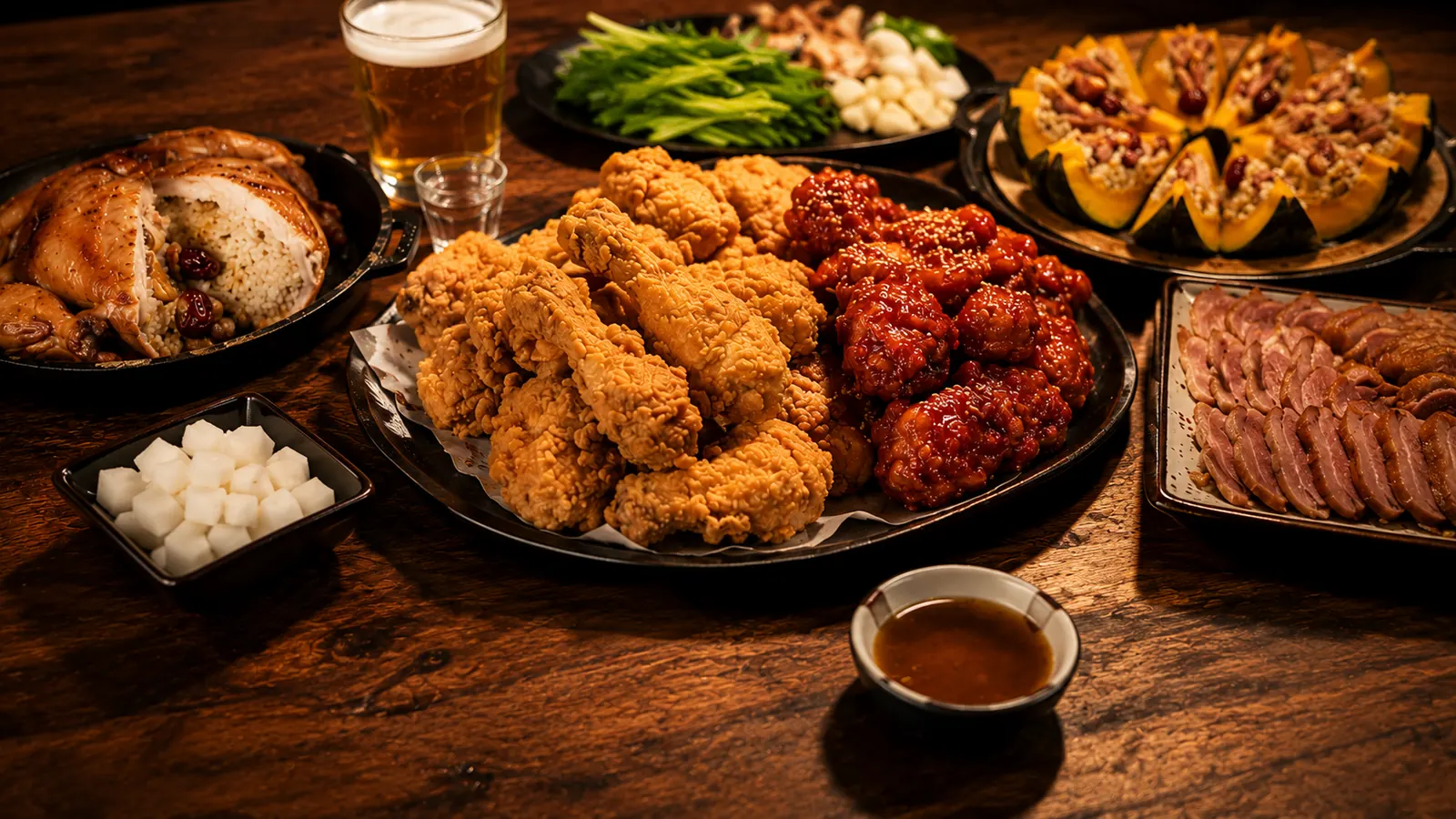
    This is the essence of Korean chicken, and the starting point of everything that follows. The single most decisive difference between Western and Korean chicken is the double-fry technique. The raw bird is brined for days so salt and juices soak deep into the meat, then coated in a thin, delicate batter and fried twice in clean oil. The first fry gently cooks the inside; the second drives every last bit of moisture off the surface. The result is a shell that shatters like glass and a rush of hot juice the moment you bite in.

    You’ll find this rustic style in Korea’s old market chicken alleys and neighborhood pubs, seasoned with just garlic and pepper to push the clean, nutty flavor of the chicken itself to its peak. It usually arrives heaped bone-in on a big plate; you tear off a steaming drumstick and dip it lightly in the coarse roasted salt served alongside. With no flashy sauce, it stays balanced on frying technique alone — so if it’s your first Korean chicken, start right here.

    양념치킨 Yangnyeom Chicken
    Tastesweet-and-sour with gentle heat
    ForSweet-savory lovers · Kids OK
    WhereMany chicken shops · delivery apps
    Price₩18,000–23,000
    ~$12–15

    Crispy fried chicken tossed in a thick red sauce — a genre only Korea could have invented. It was born to fix the way plain fried chicken dries out and turns greasy as it cools. The original is widely credited to Yun Jong-gye, who ran a chicken shop (Mexicana) in Daegu and first blended Korean gochujang (fermented chili paste) and corn syrup into the sauce. A single batch of that glossy sauce can carry 20–30 ingredients, yet even drenched in it, the batter keeps its chew and that irresistible sweet-savory pull.

    The fiery red color scares many visitors into expecting numb-tongue heat, but the spice is only a faint background — sweet and tangy notes dominate. Even kids and heat-averse eaters tend to light up at the first bite. The best way to enjoy it is with your fingers, sauce and all. Locals who refuse to give up either crunch or sweetness order the legendary banban — half fried, half yangnyeom.

    구운 치킨 Roast Chicken
    Tastelight, crisp skin, low in grease
    ForHealth-conscious · lighter bite
    WhereMany chicken shops · delivery apps
    Price₩17,000–22,000
    ~$11–15

    Instead of a deep fryer, this chicken is roasted by hot air in an oven above 200°C — a completely different branch. There’s no thick batter; only the bird’s own skin is crisped thin and golden, so it feels smooth and light, free of grease. As it roasts, the heavy fat drips away while the chicken’s own moisture stays sealed inside — taut and crisp outside, soft and tender within.

    Because it lacks the heavy, bloated feeling of fried chicken, it’s a great escape for older diners with sensitive stomachs, or anyone who wants the magic of chicken late at night while watching their diet. It carries a gently smoky character all its own, yet Korea’s signature savory depth stays fully intact — enough to earn a devoted following who order nothing else.

    길거리 장작불 치킨 Wood-fired Chicken
    Tastegentle woodsmoke, hearty rice stuffing
    ForA filling street-food dinner
    WhereStreet trucks · a few specialty shops
    Price~₩9,900 (one) / ₩16,000 (two)
    ~$7–11

    You’ll meet this one less in restaurants than on Korea’s darkened side streets — inside specially rigged trucks where oak wood burns and whole birds turn slowly on a spit. The cavity is packed tight with fragrant ginseng, jujube, garlic and chewy glutinous rice, then rotated for hours over the blazing fire. Gentle oak smoke works deep into every fiber, the skin crisps thin as a cracker, and the fat renders away to pure lightness.

    The real treasure appears once you’ve stripped the meat and opened the belly: the glutinous rice has soaked up the savory fat and rich juices like a sponge, becoming the richest, most filling ginseng rice imaginable — and scraping the crust from the bottom with a spoon can move you more than the meat itself. Walk a street at dusk and the smoky smell will pull you toward the truck and open your wallet before you know it.

    닭을 넘어 Two Duck Roasts

    Korean cooking doesn’t stop at chicken. Meet duck, and it deepens into a heavier, more restorative world. We’ll save moist herbal dishes like samgyetang (ginseng chicken soup) for another Story; here, while we’re on the subject of roasting, we introduce two ultimate duck roasts that Koreans tend to keep to themselves. Duck may be familiar to Western readers, but these Korean reinterpretations will genuinely shift your culinary horizon.

    유황오리구이 Sulfur-fed Duck
    Tastedeep, nutty, a time-honored restorative
    ForDeep, weighty meat · honoring parents
    WhereDuck specialties · fairly common
    Price~₩50,000–70,000 (whole)
    ~$33–47

    Yuhwang-ori is duck raised on sulfur that has been detoxified through a special traditional process. The duck is said to neutralize the sulfur within its body, and for that reason it has long been recorded as a prized delicacy once sought by Korean royalty and nobility. Duck is often considered lighter than other meats — rich in unsaturated fat — and here it’s thinly sliced, seared first over an oak fire, then finished on a hot stone plate right at your table.

    Listening to the fat sizzle and drip away, you pick up a golden slice and meet something no ordinary chicken can offer: a weighty, beef-like chew and a deep nuttiness that fills the mouth. Koreans wrap it in tangy pickled myeongi (mountain garlic) leaves or pile on seasoned garlic chives. Almost unknown to Western travelers, it’s a hidden gem worth searching out for true Korean high-end meat dining.

    통호박 오리구이 Whole-Pumpkin Duck
    Tastemoist, gently sweet from pumpkin
    ForSpecial dinner · foodie gatherings
    WhereVery rare · few restaurants
    Price~₩60,000–80,000 (reserve ahead)
    ~$40–53

    A showstopper for both eye and palate: a large, firm sweet pumpkin is hollowed out, packed with smoked duck and wholesome nuts — figs, ginkgo, walnuts, pine nuts — then roasted for hours in a huge, high-heat clay kiln. As the pumpkin softens, its honeyed sweetness and moisture seep deep into the duck, while the duck’s heavier fat escapes through the pumpkin wall, leaving the meat clean and moist.

    When it reaches your table and the giant pumpkin is cut crosswise, the skin unfolds like a blooming yellow flower, revealing steaming duck in all its glory. Spooning the soft, sweet pumpkin flesh together with the tender duck is honey-glazed bliss. Because it takes so much work and long kiln time, only large specialty restaurants serve it — and you can’t taste it without booking at least 3–4 hours ahead. A rare delicacy among delicacies.

    함께 즐기기 Chicken-mu & Chimaek

    Order chicken in Korea and a white side dish in a clear square tub always comes with it: chicken-mu, cubes of radish pickled in sweet-and-sour brine. Its crunch and bright acidity wash away the richness so you can start fresh — the quiet magician of the table. Add an ice-cold glass of crisp draft beer and you complete chimaek (chicken + maekju, beer), the soulmate Koreans call for whenever spirits run low.

    Restaurants hand you tiny tongs and a fork to keep sauce off your fingers, or simply give you plastic gloves — so tearing in by hand breaks no manners. Choose between bone-in chicken, with the fun of picking the bones clean, and boneless for light, one-bite pieces. Tonight, from your hotel near the mall, open a delivery app or find a local shop and meet Korea’s real nightlife.

    Even with something as simple as Western fried chicken, Koreans can’t help combining every sauce and kiln technique until they create a peak of flavor the world had never seen. What’s left at the end of that passion is, simply — a delicious bliss that makes you put down your spoon and tear in with your hands at least once a week.